 Skip to content
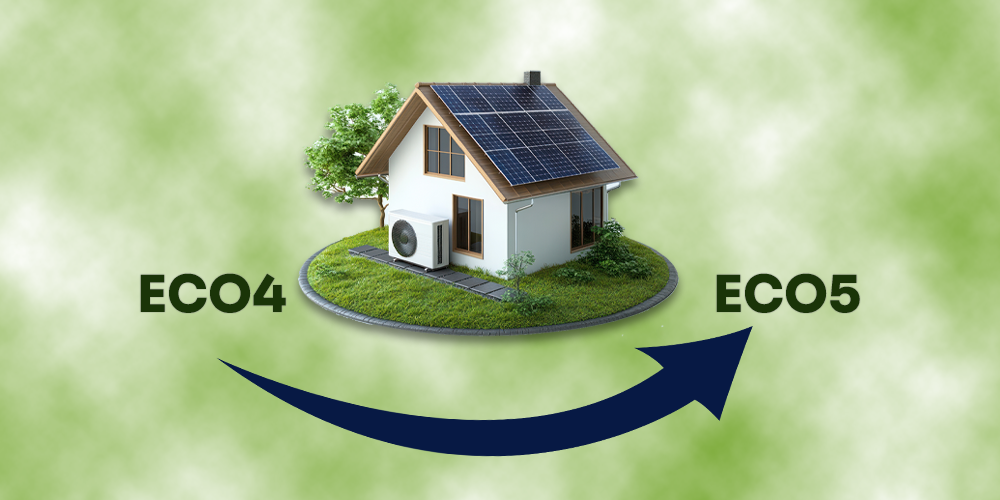
The ECO5 energy scheme is proposed by the government of the UK, which aims to reduce energy consumption and encourage the use of green energy in the form of solar panels and heat pumps to reduce carbon combustion.
This phase of ECO energy is not just the combination of previous ECO4 schemes but the development of preceding actions to make our use of energy more eco-friendly.
The Department for Business, Energy, and Industrial Strategy emphasises that such efforts are critical to meeting the UK’s goal of zero net emissions by 2050, which will help reduce pollution in homes.
Timeline and implementation for the ECO5 scheme
The ECO-5 programme is set to provide grants in 2026, right after the ECO-4 phase ends. It should last at least until 2030, but that will depend on what the government decides in the future.
The UK’s Net Zero Strategy sets ambitious temporary goals, such as cutting greenhouse gas emissions by 68% by 2030 compared to 1990 levels.
This timeline directly supports those goals. The ECO5 scheme will not only help the UK keep its promise to cut carbon emissions, but it will also help the world as a whole fight climate change and protect the environment.
ECO5 Scheme Requirements for Eligibility
The ECO5 scheme is likely to change and add to the rules of ECO4. This will make sure that help goes to the households that can make the most significant difference. In cutting down on energy use and carbon emissions. Here are the likely eligibility requirements, although the final details will not be known until closer to its launch in 2026:
1. Carbon Emissions from Households
ECO5 might look at how much carbon a property puts out as a factor in deciding whether or not to approve it.
Homes that pollute more may receive funding first, which would help the environment the most.
2. Requirements for Income and Benefits
If you receive some government benefits, like these, you might be able to receive them:
- Universal Credit.
- Pension Credit (Savings or Guarantee Credit).
- Income support
- Employment and Support Allowance (ESA).
- Jobseeker’s Allowance
- Child Tax Credits
- Working Tax Credits
ECO4 Scheme Eligibility
“100% Free Check – No Hidden Fees”
3. Families with low incomes who don’t get any benefit
Depending on how much money your family makes, you may still be able to get benefits even if you don’t get them. We might give homes that make less than the national low-income standard more attention.
4. The Energy Performance Certificate (EPC) scores
It’s likely that your home’s EPC rating will be important. Homes with ratings of D, E, F, or G may get priority because they use more energy.
5. Type of property
Most likely, there will be money for homes that the people who live there own, homes that are privately rented out, and some social housing.
Renters who meet certain income or benefit requirements may be able to get help from the government.
6. Type of Heating System
ECO5 might pay to fix heating systems that don’t work well or switch from fossil fuels to more eco-friendly fuels. We might give more attention to homes that don’t have central heating or that are using old systems.
7. Factors to Consider When Choosing a Place to Live
Rural or non-gas-connected properties may receive additional funding for renewable energy installations.
How will this affect households?
The ECO5 Scheme aims to assist families with high carbon emissions in transitioning to greener, more efficient energy sources. If your property emits more pollution than usual, you may be able to seek assistance installing renewable energy sources such as solar panels, energy-efficient boilers, or modern heating systems. Not only do these changes assist in reducing your home’s carbon footprint, but they can also save you a lot of money on energy bills. The ECO5 Scheme is critical for reducing our reliance on fossil fuels, lowering harmful greenhouse gas emissions, and achieving progress toward national environmental objectives. It accomplishes this by focusing on the people who produce the greatest emissions. This programme provides homeowners with the tools they need to live in an environmentally friendly manner while also saving money and energy over time.
Why Carbon Footprints Matter in ECO 5
Carbon footprint is the amount of carbon dioxide that our everyday activities and tasks release, both directly and indirectly. Homes with a bigger carbon footprint often use old, inefficient appliances, heating systems and energy sources that use more fuel and release more pollutants into the air. The main goal of the ECO5 scheme is to find households that produce a lot of emissions and help them make big improvements to save energy, like adding more insulation, new heating systems, and renewable energy sources. With the ECO5 scheme, houses will not only use less energy, but they will also be better for the environment and have a longer lifespan. Everyone and everything will benefit from this.
Renewable energy focus
Using renewable energy is important for quickly reaching our net-zero goals. ECO5 will support these technologies to cut down on carbon emissions from homes’ energy use by a massive amount. The International Renewable Energy Agency’s research backs up these kinds of projects by showing how important renewables are to global efforts to cut carbon emissions.
Types of energy promoted in the ECO5 scheme
The ECO5 Scheme is likely to get a lot of attention for modern technologies that help us use fewer fossil fuels, like solar panels and air source heat pumps. Studies by the Energy Saving Trust, like “Getting Warmer: A Field Trial of Heat Pumps”, show that these new technologies can help homes use much less energy and put out a lot less carbon dioxide. By making these kinds of solutions available to more communities, ECO5 not only helps homeowners switch to cleaner energy but also helps the UK reach its sustainability goals. This plan helps the UK move towards a future with less carbon and more benefits for the environment. It also encourages energy efficiency and is beneficial for the environment in the long run.
What does the ECO5 scheme offer?
ECO5 Plan: Top Goals for a Greener Future
- Solar panels
The ECO5 Scheme will encourage people to install solar panels. This will let families get clean, green energy from the sun. That means we use fewer fossil fuels, put out less carbon and, in the long run, pay less for energy.
- Heat pumps that work with air
People will be able to use heat pumps that draw energy from the air with ECO5. These work all year to pull heat from the air, even when it’s cold outside. These systems are an eco-friendly and cost-effective way to heat homes that reduces carbon pollution and heating costs.
- High-Tech Controls for Heating
ECO5 gives people more advanced heating controls that let them set the temperature just the way they like it. This makes certain that power is only used when it’s needed. This helps families save money on their energy bills, cuts down on waste, and makes things work better.
ECO5 consultation and public input
The government is constantly working with suppliers and energy providers to improve the ECO5 Scheme. They can utilise this information to plan what to do the following time. Everyone will soon be able to express their opinions in public.
This procedure guarantees the creation of a plan that effectively addresses real needs. By participating, you may directly contribute to the development of policies that encourage energy efficiency, reduce carbon emissions, and maximise the benefits of the ECO5 award for yourself and your family.
Check our website frequently for updates on consultation dates and how to participate. Your voice is crucial. By participating, you can help ensure that everyone in the future has access to affordable, high-quality energy.
ECO4 & ECO5
| Important Differences Between ECO4 and ECO5 | ||
| Features | ECO4 (2022–2026) | ECO5 (2026–2030+) |
| Main point of interest | New boilers and better insulation | Renewable energy sources like heat pumps, solar panels, and battery storage |
| Who can apply? | Usually, these are low-income or at-risk families. | It is likely that more middle-class homes, landlords, and properties that do not use gas have been added. |
| Help with technology | Upgrades to gas and oil boilers and insulation | Renewable heating, solar PV, energy storage, smart controls |
| Goals for carbon | A moderate focus on cutting carbon emissions | There is a strong need to reduce carbon emissions and focus on targeting carbon footprints. |
ECO5 scheme preparation tips
How to Get Ready for the ECO5 Programme?
If you get ready for the ECO5 programme ahead of time, you’ll be able to make the most of its funding and energy-saving options. Here’s what you need to do before the scheme starts.
1. Find out how well your home uses energy.
Conduct a quick home energy audit to identify the sources of your energy consumption and waste. Pay close attention to older appliances that use a lot of energy, as well as heating and lighting systems.
2. Use systems that need less energy.
Old, energy-guzzling appliances like heaters and boilers should be retired and replaced with new, more efficient models. It is possible to get funding for solar panels and heat pumps through the ECO5 programme. In the long term, this might end up saving you money.
3. Improve the energy efficiency of your house.
A simple approach to reduce energy consumption is to insulate your home adequately. How effectively you insulate your home’s loft, walls, and floors now will determine your heating and cooling needs when the ECO5 programme begins.
4. Explore renewable energy options.
Solar panels and air source heat pumps are two examples of clean energy technology that you might want to look into. One way that clean energy technologies can help achieve ECO5’s goal of lowering the human carbon footprint is by utilising them.
5. Read the latest news about ECO5.
When does the ECO5 show begin? Who can apply? How do I apply? Keep an eye out for official news. You can also help decide how the programme works by going to public meetings.
FAQs
What is the ECO5 plan?
The UK Government’s Energy Company Obligation has five parts, and the ECO5 scheme is the fifth. The goals are to make homes consume less energy, produce less carbon dioxide, and cut household expenditures. ECO5 will begin in March 2026, right after ECO4 expires. It will focus more on green technologies like heat pumps and solar panels. This fits with the UK’s aspirations for Net Zero 2050.
What is the time duration for the ECO5 programme?
The government will decide when ECO5 will start and how long it will last. It might start after ECO4 finishes from 2026 to 2030.
What makes ECO5 different from ECO4?
ECO4 was mostly about replacing old, inefficient boilers, improving insulation, and helping low-income families. ECO5 will focus more on using renewable and low-carbon technologies to cut down on the use of fossil fuels.
Check who is eligible for the ECO5 programme?
The final details of the ECO5 eligibility criteria are still being worked out. But it is expected to include support based on income and may also look at a household’s carbon emissions as a key factor in deciding who gets funding.
Will the ECO5 plan pay for solar panels and heat pumps?
Yes, one of the most significant changes in ECO5 is that it is moving toward renewable energy. This means that things like solar panels and air source heat pumps will probably be included.
How should I prepare to participate in the ECO5 programme?
Get yourself ready by reading up on ECO5 updates, insulate your house, look at renewable energy options, and figure out how much energy your home uses.
What is the ECO4 plan?
The UK Government’s Energy Company Obligation is now in its fourth phase, which will last until March 2026. It gives money to low-income families to help them pay for new boilers, better insulation, and other ways to save energy.
Can people who are retired apply for ECO4 or ECO5?
Yes, pensioners can qualify if they get certain benefits or meet other eligibility requirements set by the schemes.
How much does the ECO5 programme cost?
The ECO5 initiative will provide funding for qualified families to make energy-saving upgrades for free or at a reasonable cost.
How can I receive updates for ECO5?
For more details on the ECO scheme’s eligibility requirements, grant amounts, and application dates, you can visit the official government websites, energy advice websites, and installers’ websites.


