 Skip to content
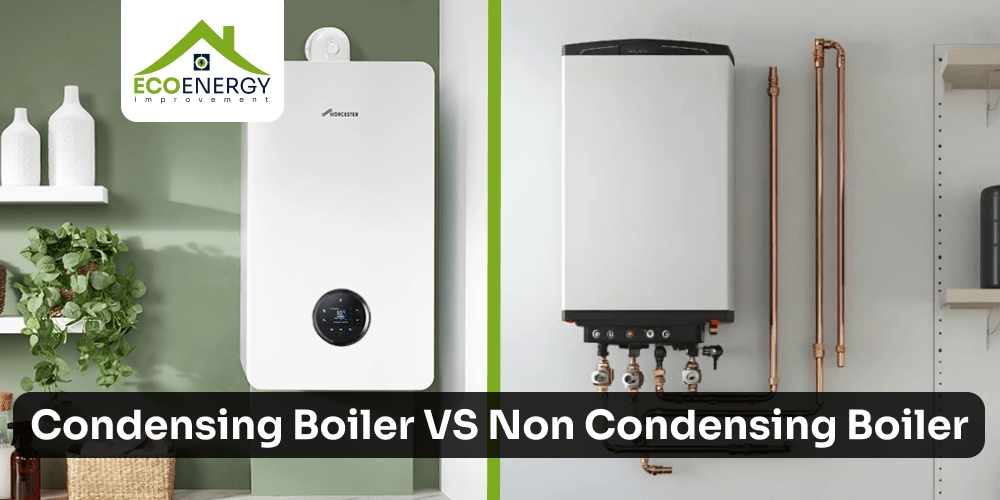
Heating systems affect residential comfort, energy use, and environmental impact. You shouldn’t just consider cost when choosing a condensing or non-condensing boiler because it influences how much you can save and how effectively it works. In the UK, where heating bills make up a substantial portion of household spending, choosing the right boiler can save you hundreds of pounds annually. With options like the free boiler grant, many homeowners can now upgrade to energy-efficient condensing boilers at little to no cost. Because boiler type also affects carbon emissions, the government has strict installation rules—knowing each option’s pros and cons can help you pick the best system for your home.
What is a condensing boiler?
New condensing boilers conserve power by using waste heat. While other boilers squander flue gas, water vapour and latent heat, it captures them. This strategy boosts efficiency to 90% or more. Condensing boilers save energy by producing more heat with less fuel. Because of their creative design. They are the most popular choice in UK households because they are efficient and legal.
What is a non-condensing boiler?
Older versions of boilers that don’t recycle exhaust gases are called non-condensing boilers. Burning fuel creates hot gases, but instead of using the heat again, these gases are sent straight into the air. Because of this, only 60–70% of the energy is turned into heat that you may use in your home. This not only makes people use more fuel, but it also makes heating bills go up. Before 2005, they were ubiquitous in houses, but today they are out of date, not as good for the environment, and not allowed in new UK installations.
How Condensing Boilers Work
Condensing boilers have an extra heat exchanger that collects energy from the gases that come out of the flue. This recaptured heat warms up cold water before it enters the system, which cuts down on the energy needed to fully heat it. The name “condensing” comes from the fact that the process turns steam back into water. This design reduces heat loss, which means that each unit of fuel burnt is worth more. The ultimate product is a heating system that works really well, uses less fuel, and releases less carbon.
How Non-Condensing Boilers Work
Non-condensing boilers have a simpler process. When the burner ignites, it heats the water and propels hot gases up the flue pipe. These heated gases escape fast into the atmosphere without being reused, which means a lot of energy is squandered. Since the design lacks a secondary heat exchanger, the system can never attain the efficiency standards of condensing boilers. This older method leads to increased gas use, more pollution, and much larger energy bills. It was okay years ago, but it’s now inefficient compared to modern options.
ECO4 Scheme Eligibility
“100% Free Check – No Hidden Fees”
Types of condensing boiler:
Combi Condensing Boiler
People who care about the environment and live in modern homes prefer combi condensing boilers because they are small and work well. It heats and provides hot water without needing a water tank, which makes it great for small homes. Many ECO4 homes could get a free boiler grant to help them buy new, more energy-efficient boilers to replace their old ones. This new idea encourages the use of renewable energy and cuts monthly bills by a large amount.
System Condensing Boiler
A system condensing boiler is best for medium-to-large families that need hot water from several taps. While having a separate hot water cylinder, they are energy efficient, operate well, and emit low emissions. Families that qualify can obtain a system boiler from the government and the ECO4 scheme, making their homes more energy-efficient and saving them money on heating. Families that value comfort and green energy can use it.
Regular (Conventional) Condensing Boiler
A typical condensing boiler works well in older eco homes that already have tanks and pipes. It is a good improvement under the ECO4 scheme because it saves energy and is very energy efficient. People who own homes that satisfy the requirements can often get a new free boiler through a government grant or a free boiler scheme. This kind of boiler helps the UK reach its green energy targets while also lowering rates.
Efficiency Comparison – Which One Saves More?
There is a big difference in efficiency between condensing and non-condensing boilers. A condensing boiler works at 90–95% efficiency, which means that almost all of the fuel it burns is turned into useful heat. Non-condensing boilers, however, only work 60–70% of the time and waste up to 40% of the energy down the flue. This difference means that you will save money on your gasoline expenditures. People who switch to condensing systems can save hundreds of pounds a year. Efficiency also has an effect on carbon emissions. For example, condensing boilers pollute a lot less than earlier systems.
Cost Comparison – Initial Price vs Long-Term Savings
Non-condensing boilers are cheaper to install, but they cost more to run. Condensing boilers cost more to buy since they are harder to install and have more complicated designs. Because they are so efficient, they save you a lot of money on your monthly energy expenses. These savings are more than the cost of the boiler during its lifespan. Many government grants and schemes assist in paying for condensing boiler installation, making them cheaper. Short-term savings with a non-condensing system usually cost more in the long run.
Installation Process and Practical Challenges
Condensing boilers require a condensate drainage line, making installation more difficult. However, trained installers make the job straightforward most of the time. Although non-condensing boilers are easy to install, the UK bans their use in new residences. Condensing systems in older homes may cost more, but government incentives may help pay for them. Long-term investment in a condensing boiler is recommended.
Environmental Impact of Boilers
How much pollution your home emits depends on your boiler. Condensing boilers utilise less fuel and release fewer greenhouse emissions, making them more environmentally friendly. They collect heat from exhaust gases to reduce residential carbon emissions. However, non-condensing boilers are inefficient and release more carbon dioxide and other harmful pollutants. Since the UK wants to reduce carbon emissions, condensing boilers are essential for sustainable living. This small technological change affects the planet over time.
Space Requirements in the Home
Many condensing boilers are smaller and lighter than non-condensing boilers. Because these boilers have older designs and technology. They also needed larger flue systems, making installation harder. Because they are tiny and easy to install, condensing boilers can be used in utility rooms, closets, and kitchens. Modern homes that maximise space use will fit their floor plan. They are popular with homeowners because they allow them to maximise living space without compromising heating system efficiency.
Benefits of Condensing Boilers
Energy savings are a major benefit of condensing boilers. Due to their hard work, families save £300–£400 annually. Small and space-efficient. Modern homes look amazing with them. Cleaner air and a better environment help the UK meet its carbon-reduction goals. So homeowners never have to worry about getting in jail or having issues selling their properties; they follow the laws carefully. They are an excellent choice for anyone who wants to save money, be environmentally friendly, and be comfortable because they last a long time.
Disadvantages of Non-Condensing Boilers
These days, non-condensing boilers are not as useful for domestic use because they have so many problems. Because they are not very efficient, they cost a lot of money each month and require more fuel. They make the environment worse by releasing more harmful chemicals. They do not meet the standards of today’s buildings, making repairs or replacements difficult and costly. Their property’s worth could decline due to their outdated technologies. A non-condensing boiler is bad for the planet and expensive to maintain over time.
Safety Features in Condensing Boilers
Condensing boilers are safe to use and don’t put your health in danger because they have modern safety features. Their construction ensures that no toxic gases can enter. To prevent any buildup, the collected water can be properly drained through the condensate line. Many of them have pressure controls, flame monitors, and automatic shut-off systems to give you extra peace of mind. It is not only safer but also more efficient for boilers to have these features than older boilers that didn’t have these features. Homeowners can rest easy knowing that their system puts safety first.
Boiler Regulations in the UK
The UK government required condensing gas and oil boilers for residential houses in 2005. Cuts to national energy waste and carbon emissions were the stated goals of the law. From that point on, new homes were no longer equipped with non-condensing boilers. Since there are programmes that can assist with the expenses, homeowners whose systems are old should upgrade them. As a whole, these restrictions aim to make houses greener, more energy efficient, and less harmful to the environment and the climate.
Common Myths About Condensing Boilers
“They cost too much to put in.”
Reality: the truth is that the installation cost is larger up front, but the savings on energy costs over time soon make up for it.
“They need repairs all the time.”
Reality: modern condensing boilers are quite reliable and just need to be serviced once a year, like any other boiler.
“They don’t last long.”
Reality: the truth is that, like regular boilers, a condensing boiler can survive 10 to 15 years if you take care of it and keep it up.
“They’re hard to use.”
Reality: most modern condensing boilers have easy-to-use controls and settings that make them easy to use every day.
Grants and Schemes for Boiler Replacement
The UK government has a number of programmes that help homeowners pay for new, more efficient boilers. The ECO4 programme is one of the most popular. It lets homes that qualify have free or significantly subsidised boiler installations. These grants help families with low incomes or those who are at risk move to new condensing boilers. Homeowners can save thousands on installation fees and lower their bills by taking advantage of these kinds of programmes. This makes it cheap and very helpful to upgrade.
Which boiler is best for your home?
Most households should get a condensing boiler since it works well, saves money, and follows all the requirements. It keeps the house warm, saves money, and benefits the environment by cutting down on pollutants. Non-condensing boilers might only be used in very old homes where it’s hard to replace them, but they can still be replaced. Condensing boilers are the finest investment for every modern home since they will pay off in the long run. They are the ideal choice because they are good for the environment and the economy.
The future of home heating in the UK
The future of heating homes is going to be more efficient and long-lasting. Condensing boilers are currently the norm, but renewable technologies like air source heat pumps and hybrid systems are gradually becoming more common. As energy costs go up, families will keep putting solutions that save money at the top of their lists. Over time, we will use fewer fossil fuels and more environmentally friendly technologies. But for now, condensing boilers are still the best and most common option in the UK.
FAQs
Is it still possible to buy a non-condensing boiler in the UK?
No, since 2005, new installations cannot use non-condensing boilers.
How long does a boiler that condenses last?
With regular maintenance, condensing boilers usually last between 10 and 15 years.
Is it more expensive to keep condensing boilers running?
The only difference in maintenance costs is that you have to inspect the condensate pipes on a regular basis.
Do condensing boilers make a lot of noise?
Condensing boilers made nowadays are quiet; therefore, they are good for small homes and apartments.
Is there money available to assist with paying for a new boiler?
Yes, many families can acquire free or low-cost replacements through programs like ECO4.


