 Skip to content
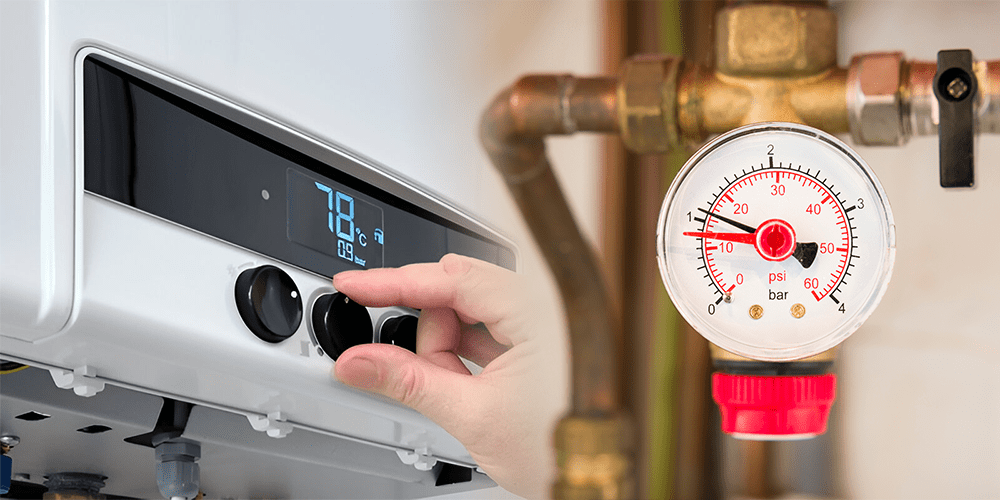
While the system is in use, the vast majority of domestic boilers function at their maximum efficiency when the pressure is between 1 and 2 bar. This is typically represented within the green zone of the pressure gauge. Anything that is significantly over this range, particularly anything that is beyond three bars, shows that there is a great amount of pressure that should not be neglected.
Causes of High Boiler Pressure
The pressure within a boiler can rise to dangerous levels for a number of different causes. The most common causes are overfilling the system with water while adding it, a damaged pressure relief valve, or difficulties with the expansion vessel that should absorb the additional water pressure. When air is trapped or limescale accumulates in the system, pressure levels might increase in certain situations.
Signs Your Boiler Pressure Is Too High
It is possible to inspect the gauge that is located on the front of your boiler in order to find out if the pressure is too high in the majority of situations. The needle remaining in the red zone serves as a warning that danger is present. Additional signs are the existence of odd noises coming from the boiler, water leaking from the pipes, or an unequal distribution of heat from the radiators. The boiler is equipped with the capability to automatically shut down in specific situations as a measure of protection.
ECO4 Scheme Eligibility
“100% Free Check – No Hidden Fees”
Risks of Running a Boiler at High Pressure
Boilers are put under additional stress when they are run at high pressure, which results in greater stress on the pipes, couplings, and other components within the boiler. This increases the likelihood that there will be damage to vital components of the system, leaks, or burst pipes. If it is not attended to, it could shorten the life of the boiler and be very expensive to repair.
Impact on Energy Efficiency and Bills
When a boiler is under stress, it does not operate as efficiently or smoothly as it should. The additional pressure makes it more difficult for the system to maintain a stable temperature, which results in energy being wasted. This has the potential to increase your heating expenses over time, even if the system appears to be functioning well.
Can High Pressure Damage the Boiler?
Thankfully, prolonged exposure to high pressure can result in harm to things. Seals and valves can cause leaks that won’t stop if they break. Some parts are more likely to break than others. These are some examples. Should the situation be exceedingly dismal, it is feasible that the boiler will want a substantial quantity of repairs or maybe a total replacement.
Safety Mechanisms in Modern Boilers
Without a doubt, prolonged exposure to high pressure can result in harm to things. If they break, seals and valves can create continual leaking or leakage. These components are examples of parts that are especially vulnerable to failure. Should the situation be exceedingly dismal, it is feasible that the boiler will want a substantial quantity of repairs or maybe a total replacement.
What to Do If Your Boiler Pressure Is Too High
If you see that the pressure is high, the first thing you should do is turn the boiler off and allow it to cool down. Following that, you may attempt to bleed your radiators in order to release the air that is trapped inside them and to reduce the pressure. It would be a good idea to call a Gas Safe licensed engineer to properly identify and resolve the source of the problem if it continues to occur.
Preventing High-Pressure Issues in the Future
The most effective method of avoiding pressure issues is to get your boiler serviced on a regular basis. It is important to check the expansion vessel, the relief valve, and the pressure gauge on a yearly basis in order to ensure that they are all functioning correctly. When you are refilling your system with water, it is crucial to prevent overfilling it as well.
Solution: How to Deal With High Boiler Pressure
If you find that the pressure in your boiler is excessively high, you should switch it off and wait for it to cool down. In order to release any additional pressure and ensure that you have not overinflated the system, bleed your radiators. If the issue persists, you should have a Gas Safe engineer have a look. A ruptured valve or expansion vessel is typically indicated by this. Problems can be prevented from occurring in the future with the help of routine maintenance.
When to Call a Professional Engineer
If you perform basic tasks such as bleeding the radiators but your boiler pressure continues to rise, it is time to call in a professional. A damaged expansion vessel or relief valve are two examples of more serious issues that could be the cause of excessive pressure all the time and would require professional repair.
FAQs
How much boiler pressure is too much?
Anything over 2.5–3 bars is excessive. This stress level may cause the boiler to release steam via safety measures.
Can high boiler pressure cause leaks?
Yes. High pressure can destroy seals, couplings, and valves, leaking water around your boiler or pipes.
Can I use a high pressure boiler ?
Yes, the plugin offers extensive customization options. You can modify colors, typography, spacing, and borders to match your website’s design. The accordion behavior can also be adjusted, such as enabling auto-close, setting items to open by default, or allowing multiple sections to be expanded at once. For advanced styling, custom CSS can be applied through the WordPress Customizer or additional CSS settings in the block editor.
How can I lower my house boiler pressure?
You can release trapped air by bleeding the radiators or checking for system overfill. Call an engineer if pressure persists.
Should I replace my boiler if the pressure is always high?
Not always. Broken valves or expansion vessels can be fixed. If your boiler is old and has pressure issues, a new one may be cheaper.


